Thursday, November 12, 2020

We Can Label!

Parents, do you know what it means to label? After today’s lesson, I hope your children have a better understanding of what it means to label a picture. A label gives the reader information about the picture.

So far during Writer's Workshop, I have been encouraging students to label themselves in their illustrations as "me" so the reader knows which character they are.   

Today they got to label me, the teacher!


Yes, they can!


After, they had the opportunity to practice labeling on their own.  They each got a post-it and labeled something in the room.


I encouraged the children to go home and label the things around their homes – the couch, a table, a book, anything! Food and toys were suggested by students.  Rumor has it that pets, brothers and sisters, and you might be getting labeled tonight – just a warning ;).

When they labeled, I asked the children to listen for and write the first sound of the object and, if they were able to, listen for the last sound as well.  For those who like a challenge, they tried the first, a middle, and a final sound! Associating the sound with a word they are familiar with is always helpful (i.e. giving the clue /t/ like top if they are trying to spell table).

Labeling helps us to understand information in pictures and is a precursor to writing sentences. During Writer’s Workshop, I have modeled and the children have practiced beginning with an idea, illustrating it with great detail, and then labeling the people and things in their pictures. Eventually, they will be able to use those labels to develop their story and formulate sentences.  Children are learning that good writers have enough detail in their pictures to tell the story.  With a little more practice, your child should be able to confidently say "I can label a picture!"

I would love to share with the class what children labeled at home!  You can add a photo or sentence or two to the padlet below.  Simply double click in the large, yellow padlet box, add your child's name as the title and either click on the upload arrow to upload a picture or just write a sentence telling what your child labeled.  If you would prefer to email me a picture, I am more than happy to add it to the padlet for you!

Made with Padlet

If your child draws pictures or writes cards to friends and family, encourage him/her to listen for the beginning and ending sounds or the beginning, a middle, and an ending sound when labeling their illustrations.  The spelling doesn't have to be perfect!  I like how my neighbor teacher, Mrs. Murphy, reminds her students they are doing "young writer" spelling.  I encourage my students to do their best to listen for the sounds they hear when stretching out a word and to use those to sounds to spell.

Happy Labeling!

Duck for President!

Yes, you read that correctly!
Last week, students listened to the read aloud of Duck for President by Doreen Cronin. In the book, Duck was tired of doing work on the farm and thought if he ran the farm, things would be different.  Soon, he was voted to be governor, and then president.  At the end of the story, he realized being a president is hard work so he returned to the farm to write his autobiography.  We learned election vocabulary such as vote, ballot, and requirement.  

Then students had to share their reasons why they would vote for either Duck or Farmer Brown to be president.  Based on a persuasive list of reasons, it was already looking like Duck was the popular candidate.  Preliminary voting showed a 14-1 vote in favor of Duck.  However, immediately after, Logan gave a convincing argument why Farmer Brown would make the better president and 5 classmates changed their minds!

Students enjoyed making campaign posters to show their support of their favorite candidate.  Listen to the students' reasons why they would vote for either Duck or Farmer Brown in the video below.


Our social studies unit on Citizenship connects with the MA state standard's supporting question "What does it mean to be responsible?".  Be responsible is one of our school's 4B's as well.  We discussed what responsibilities a president has as a leader of our country.


We also thought about the responsibilities teachers and students have.  We noticed that there are some similarities in responsibilities for children and adults if we all want to be respectful, caring people.


Last Wednesday, students couldn't wait for the opportunity to be part of the voting process and actually cast their vote.  Our plexiglass dividers were perfect for voting booths!


Each child in my class had a job: give out hand sanitizer, check people in, ensure each voter only took one ballot, be in charge of the ballot box, point the voter to their "I voted!" badge, or hold up signs urging others to vote.  Everyone was very polite and patient!


We counted the votes and recorded them on a chart using tally marks.  We then recounted the votes for each candidate to ensure we counted correctly.  


Reading Duck for President was a wonderful way to introduce children to the election process!

MA Social Studies Standards
Topic 1. Civics: Classroom Citizenship [K.T1]
Standard 2. Take on responsibilities and follow through on them, being helpful to and respectful of others.
Standard 3. With prompting and support, give examples from literature and informational texts read or read aloud of characters who show authority, fairness, caring, justice, responsibility, or who show how rules are created and followed.


Friday, February 21, 2020

February Vacation Fun

Hi Everyone!

I hope you are having fun this vacation! I can't wait to hear all about it! Did you visit family or spend time with friends? Did you watch any good movies or travel? Did anyone bake something yummy or do a cool craft project?! Add to the padlet below a sentence or two or even a picture of a special vacation moment that you would like to share. On Monday, each of us will be choosing one special moment to illustrate and write about. This padlet can help with our brainstorming when we are all a little tired as we settle back into our routine. :)

Simply double click on the board and write a note. Write your name at the top of the note as the title.

Made with Padlet

Tuesday, December 31, 2019

Vacation Fun

Happy New Year!  I hope all of you are having a wonderful vacation with your families.  The week has gone by sooo fast!  I can't wait to hear about all of the exciting things you did this week.  Add to the padlet below a picture or two or even just a sentence about something you would like to share about your vacation.  On Thursday, each of us will be choosing one special vacation moment to write about.  This padlet can help with our brainstorming when we're all a little tired as we settle back into our routine. :)

Made with Padlet

Thursday, December 19, 2019

Comfy, Cozy Day

Today's frigid temps made it the perfect day for Comfy, Cozy Day! Children and teachers enjoyed being warm and comfortable in their pajamas. 

This morning, children were excited to learn they each got their own Polar Express ticket that would be hole punched by a Conductor.


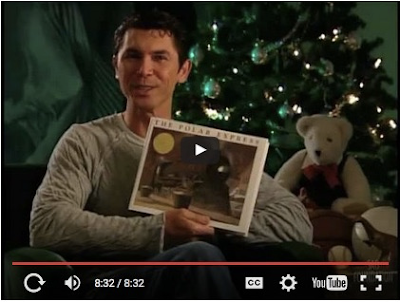
We then enjoyed watching a read aloud of the Polar Express with the other Kindergarten students in the library.


After, we had a short holiday sing-a-long! "Jingle Bells", "Frosty," and "Rudolph the Red-Nosed Reindeer" were the favorites.

To conclude our Polar Express morning, each Kindergartner received their very own silver bell!  Our conductor and musical guest was a former student's grandfather, Mr. Rhoads.  He truly helped make the event very special and memorable for the kids!  Thank you for joining us, Mr. Rhoads!


During today's math lesson, I gave my students a challenge.  They counted 1 window and 4 wheels on a picture of a train.  They had to figure out how many windows and how many wheels there would be if the number of trains kept increasing.  Students worked in groups of 3 or 4 to find a strategy that worked best to figure out the solutions to this math problem.  Some students drew groups of 4 circles, some counted groups of 4 fingers, and others counted on from what they had already figured out.  The groups wrote their answers on Post-its and added them to the class chart.  We will finish this activity tomorrow.  At the end, we'll see that most groups got the same data and we'll see what patterns and other observations we can make about this data.  We will learn that the number of windows is always equal to the number of trains because there is only one window on each train, and the number of wheels will always be more than the number of windows.  There's nothing better than critical thinking, teamwork, and perseverance all while working comfortably in our pajamas!


After lunch, we each shared what our favorite part of the day was and I recorded the responses in the Padlet below.

Made with Padlet

We ended the day with a Gingerbread Cookie Decorating Party to connect with the folktale unit we've been working on these past 6 weeks.  We have read different versions of The Gingerbread Man, The 3 Bears, and The Little Red Hen and have practiced comparing and contrasting stories, identifying story elements, and have been working on retelling stories.  The class loved decorating and eating the cookies!  Thank you to the parents who donated supplies or volunteered their time to help with this party!


It was such a fun day!!

Wednesday, November 6, 2019

We can label!

Parents, do you know what it means to label? After today’s lesson, I hope your children have a better understanding of what it means to label a picture. A label gives the reader information about the picture.

When we learned about apples before our apple picking field trip, students were introduced to the word labeling.  They labeled the parts of an apple diagram and their pictures about our field trip.

Today they got to label me, the teacher!


Yes, they can!


After, they had the opportunity to practice labeling on their own.  They each got a post-it and labeled something in the room.


I encouraged the children to go home and label the things around their homes – the couch, a table, a book, anything! Food and toys were suggested by students.  Rumor has it that pets, brothers and sisters, and you might be getting labeled tonight – just a warning ;).

When they labeled, I asked the children to listen for and write the first sound of the object and, if they were able to, listen for the last sound as well.  For those who like a challenge, they tried the first, a middle, and a final sound! Associating the sound with a word they are familiar with is always helpful (i.e. giving the clue /t/ like top if they are trying to spell table).

Labeling helps us to understand information in pictures and is a precursor to writing sentences. Recently, we started Writer’s Workshop.  I have modeled and the children have practiced beginning with an idea, illustrating it with great detail, and then labeling the people and things in their pictures. Eventually, they will be able to use those labels to develop their story and formulate sentences.  Children are learning that good writers have enough detail in their pictures to tell the story.  With a little more practice, your child should be able to confidently say "I can label a picture!"

I would love to share with the class what children labeled at home!  You can add a photo or sentence or two to the padlet below.  Simply double click in the large, yellow padlet box, add your child's name as the title and either click on the upload arrow to upload a picture or just write a sentence telling what your child labeled.  If you would prefer to email me a picture, I am more than happy to add it to the padlet for you!

Made with Padlet

When completing homework each night, encourage your child to listen for the beginning and ending sounds or the beginning, a middle, and an ending sound when labeling their illustrations.  The spelling doesn't have to be perfect!  I like how my neighbor teacher, Mrs. Murphy, reminds her students they are doing "young writer" spelling.  I encourage my students to do their best to listen for the sounds they hear when stretching out a word and to use those to sounds to spell.

Happy Labeling!

Tuesday, October 29, 2019

Pumpkin Day


Pumpkin day was a success!  A visit from an architect, an extended art class, and a class request for pattern day made the day even more fun!  Ms. Nasser reminded us that the day was perfect for Pumpkin Day because the architect, Megan Carriere, was there to talk about patterns in architecture and pumpkins are covered with lines - a type of pattern!  The day was still filled with many pumpkin activities.


Check out the fun we had!

We read to pumpkins in the Reading Patch.  The children were SO excited to read to the pumpkins!!


We read about the pumpkin life cycle, played pumpkin life cycle war, and matched rhyming pumpkins.


We also sorted pictures that start and do not with the letter p, practiced ordering numbers to 20, and even wrote pumpkin stories!


The children were very excited for the end of the day when they got to travel to four investigation stations that parent volunteers facilitated.

Children counted the number of lines on their pumpkins and remembered to use smart counting strategies and they determined if pumpkins sink or float.  Some students were very surprised that their heavy pumpkins float!


These hard working mathematicians also measured the height of their pumpkins with cubes and had the opportunity to feel the gooey inside of a pumpkin and count its seeds.


To count all the seeds, Mrs. Way had the children each grab a handful and put a group of ten seeds in each small cup.  We arranged the cups of seeds into ten frames so we could practice counting by tens to 100 and then from there counted by hundreds and the leftover tens and ones.  The total number of seeds for our pumpkin was 354!!  


Thank you to family members who shared your seed estimates with the class.  We enjoyed reading the comments!

Thank you to Mrs. Cammarata, Mrs. O'Leary, Mrs. Way, and Emily's Grandfather for helping with this fun activity!  Also, thank you to the Grella family for donating a couple of the pumpkins.

After Pumpkin Day, we used our new knowledge to compare apples and pumpkins in a Venn diagram.


We finished up our pumpkin unit by reviewing what we already knew about pumpkins prior to the start of our unit and what we were hoping to learn.


The children were surprised with how much they learned about pumpkins.  Congratulate your pumpkin experts on the new knowledge they attained and have been eager to share.